
Two Years of Septaluna – Building More Than a Game
When people ask how long Septaluna has been in development, the honest answer is "about two years."
The less obvious answer is that I haven't really spent those two years building a game.
I've spent them discovering how this game wants to be made.
Looking back, the journey naturally fell into three phases, although I didn't recognize them while I was living through them.
The first six months were almost entirely dedicated to Unreal Engine. Tutorials, experiments and plenty of discarded projects taught me the basics—not of game design, but of the language I would eventually use to express my ideas. There wasn't much of a game to show for it, but that was never the point. Before I could tell a story, I first had to stop fighting the engine every time inspiration struck.
The following year finally resembled game development. Systems emerged one after another. Dialogue, interactions, cameras, inventory, persistence—everything that makes an adventure game feel alive slowly found its place. The prototype wasn't meant to impress anyone. It existed to answer a question that no amount of planning could resolve:
Can I actually build the game I have in mind?
Fortunately, the answer turned out to be yes.
Ironically, that's when I encountered the biggest obstacle of the first two years.
The prototype begins aboard a damaged cargo ship drifting through space. For months I found myself returning to the same corridors, the same lighting and the same unfinished scenes, polishing mechanics that were never meant to become the final experience. Somewhere along the way, I realized I had started feeling exactly like my protagonist.
I was stuck in a broken spaceship.
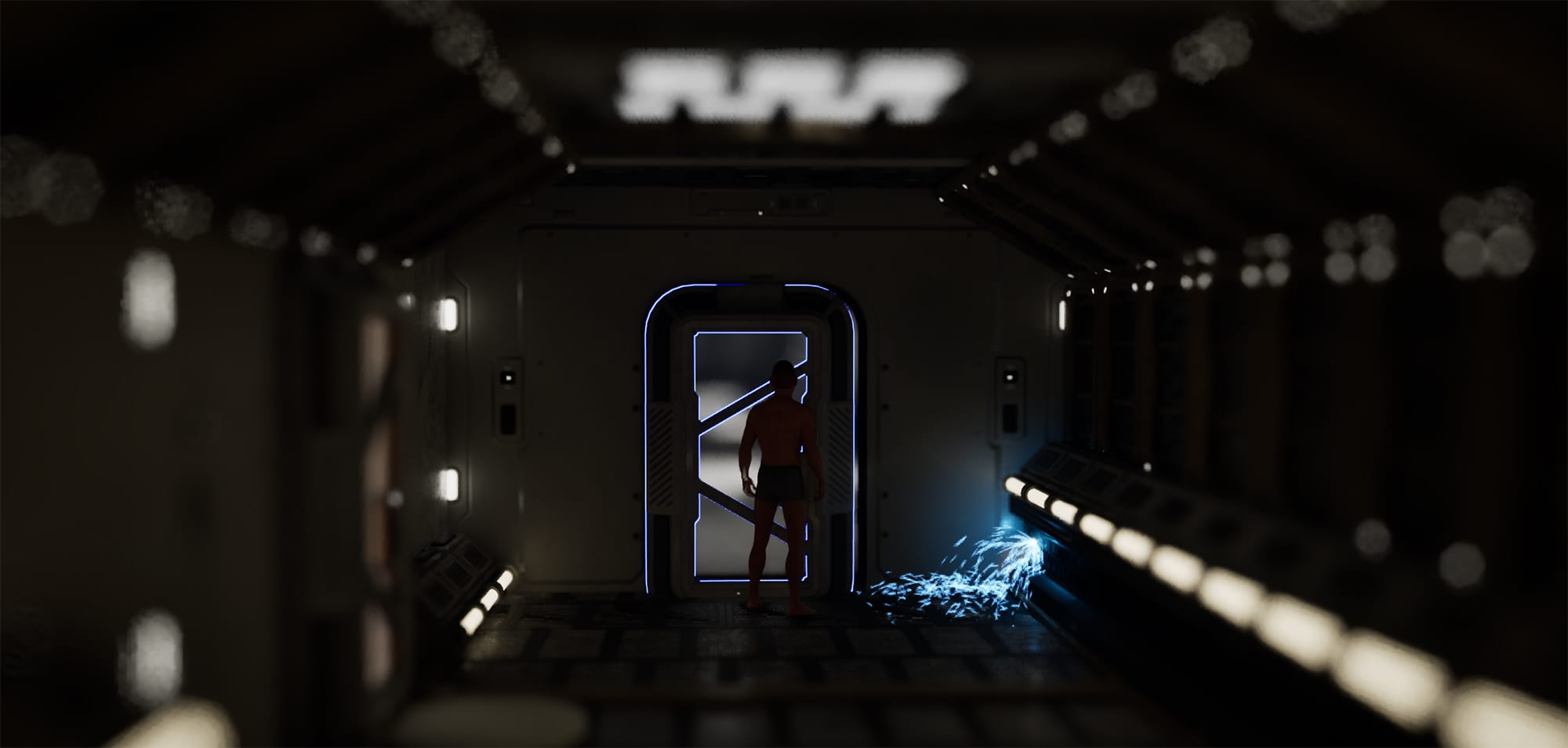
Nothing was wrong with the project. Nothing was wrong with the story. But emotionally, I had stopped travelling. Instead of exploring a world, I was maintaining a construction site.
That realization changed everything.
If Septaluna was going to accompany me for years, I couldn't postpone the enjoyment until release day. The process itself had to become something I genuinely looked forward to. So my focus shifted away from features and toward something much less visible. I spent the next months writing instead of programming, organizing instead of implementing and carefully selecting the tools that would accompany me for the long haul. Documentation, project management, AI as a creative sparring partner, production workflows and writing conventions suddenly became just as important as another mechanic or another environment.
At first, this felt strangely unproductive.
Only later did I realize what was really happening.
I wasn't building Septaluna anymore - I was building the workshop in which Septaluna could eventually be built.
There was another process unfolding in parallel—one I barely noticed while it was happening.
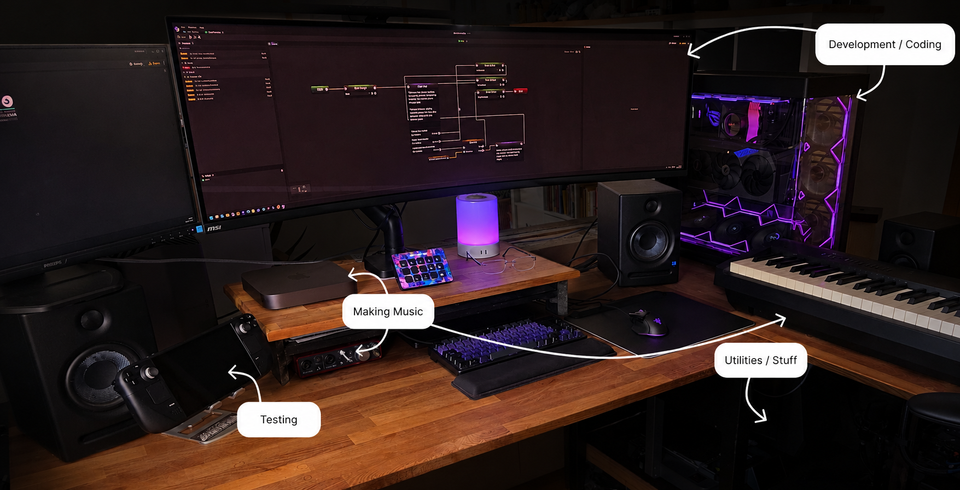
Whenever Marketplace assets went on sale, I picked up pieces that might someday find a home in the project. Not because I immediately needed them, but because they resonated with the world I was trying to create. My MacBook gradually became the place where dialogue appeared over cups of coffee in changing places, while the piano remained within arm's reach whenever a scene wanted to become music before it became words.
Even time away from the desk slowly became part of development. Long drives turned into opportunities to listen to game development podcasts. I wasn't searching for a workflow to copy, but for perspectives. Hearing other developers honestly discuss production, scope, storytelling and the realities of finishing games made solo development feel surprisingly connected. Their experiences rarely gave me direct answers, but they consistently helped me ask better questions.
The room around me changed as well. Books that had shaped me found their place on the shelves. Adventure games, Terry Pratchett, pixel art and game design slowly accumulated—not because they looked impressive, but because they reminded me why I had fallen in love with games and stories in the first place.
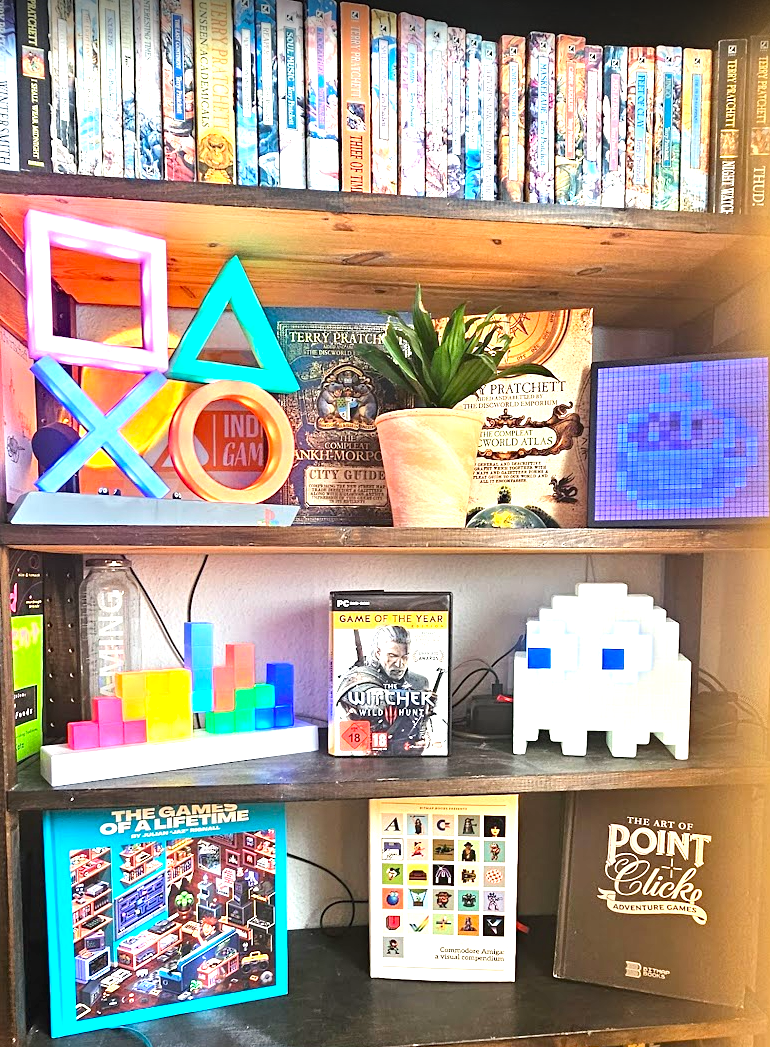
Without consciously planning it, I had surrounded myself with the craft from every direction.
Somewhere along the way, Septaluna even found its colors. Soft pinks and violets started appearing in concept art, then on my desk, and eventually in the ambient lighting of the room itself. Today, switching those lights on has become part of beginning a work session. It's a tiny ritual, but it quietly tells my brain that it's time to return.
People occasionally ask how I stay motivated while balancing a day job, helping digitize the processes in my wife's organic food retail shop and somehow still finding time for music, software projects, house renovations and game development.
The truthful answer is that I rarely think about motivation at all.
Instead, I gradually made Septaluna the place I wanted to spend my evenings.
Every session begins almost identically. I turn on the PC, switch the lights to their familiar purple glow, make myself a cup of rooibos vanilla tea and open Unreal Engine. Somewhere within those small rituals, work quietly turns into immersion. Before I've written a line of dialogue or adjusted a single material, it already feels like I've stepped back into the world.
Then I spend a few hours with Nell.
Not writing about her, but thinking with her.
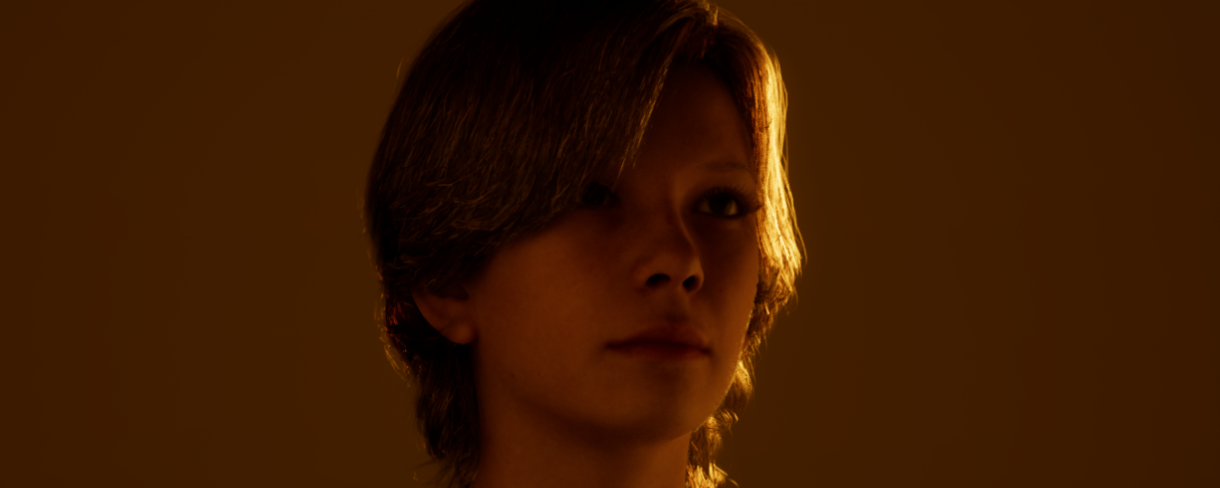
How would she react to this situation? Would she make that joke? Would she notice the tiny inconsistency nobody else sees? Spending enough time with a character inevitably changes the relationship. At some point you stop inventing their reactions and simply begin to know them.
That doesn't feel like work - it feels like visiting a place I'd choose to spend time in anyway.
Not every month was spent inside Septaluna, though.
Every now and then I deliberately wandered off the path. Sometimes that meant experimenting with a smaller game idea like Axion Rush, tap-dancing into the rabbit hole of public funding. Other times it meant investigating hardware / software projects such as EvoPebble or simply exploring an entirely different technical problem for a while.
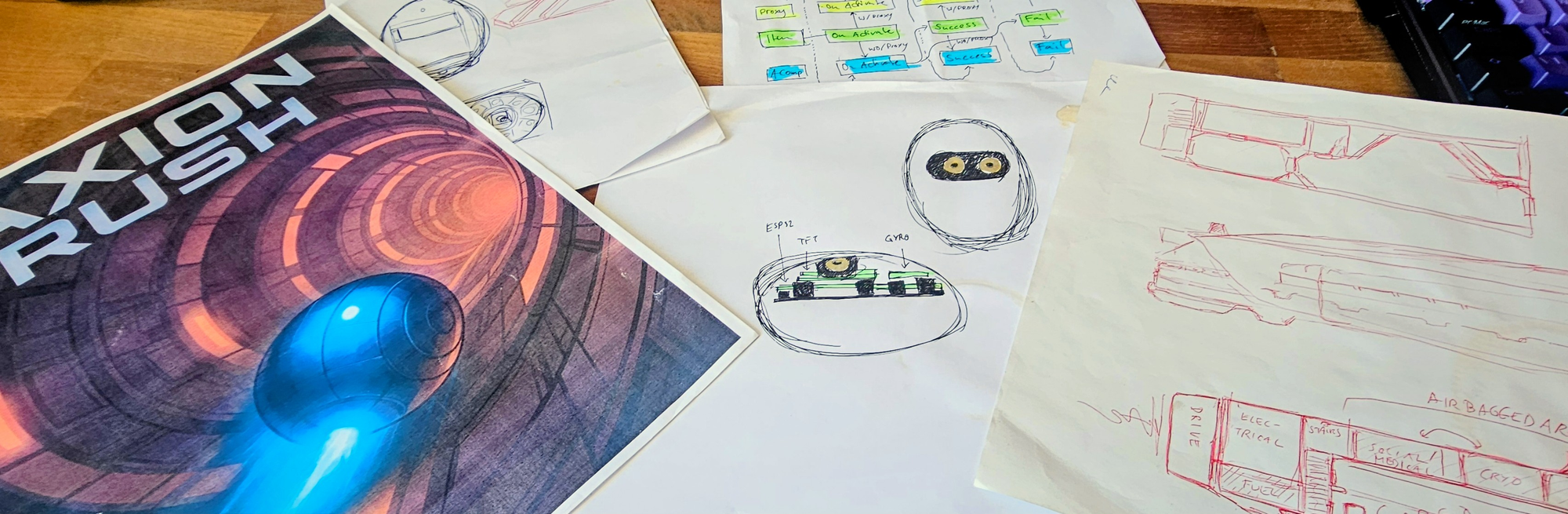
At first, those detours felt like distractions. Now I think they were necessary.
Each one answered a question that had quietly settled somewhere in the back of my mind. Would I rather build tools than worlds? Would I enjoy creating something smaller? Was there another project waiting to take priority?
None of those questions could be answered by thinking alone - they had to be explored. And every single time, once the question had been answered, I found myself returning.
Not because I felt guilty, but because I genuinely wanted to continue.
Perhaps the biggest lesson of these first two years wasn't technical at all.
It was about perspective.
People often recommend breaking large projects into smaller pieces, and I think they're right—but only halfway. Working on a single slice keeps the project manageable, yet every slice still has to belong to the same sausage.
On any given evening, I only ask myself to solve one problem. It might be a conversation, a mechanic or the atmosphere of a single room. Tomorrow it will be something completely different. The challenge isn't making progress everywhere at once. It's making sure today's tiny decision still belongs to the same world. Every slice has to carry the same tone, the same humor and the same emotional language as the finished game will someday have.
That's probably the biggest shift in my thinking: I no longer try to build the whole game every evening. I simply ask whether today's slice still tastes like Septaluna.
If someone asked me what I have to show after two years, I could point to a prototype, some gameplay systems and mechanics, music sketches, documentation, concept art and a world that finally understands its own identity.
But none of those are the thing I'm most grateful for.
The most valuable thing I've built isn't inside Unreal Engine.
It's a way of working that I trust.
Looking back, I don't think I spent these two years optimizing productivity so much as reducing friction. Learning Unreal removed the uncertainty of the engine itself, while the prototype answered whether the game I imagined was technically achievable. Documentation gradually replaced confusion with clarity, podcasts made the solitary nature of development feel less isolating, and my workspace slowly evolved into somewhere I genuinely wanted to spend my evenings.
Each change was small on its own. Together, they made returning tomorrow easier than walking away today.
The game is still years away from release. Strangely enough, that no longer worries me.
I no longer spend much time thinking about the finish line. Instead, I think about making another cup of tea, switching on the purple lights and adding one more slice to a world that already feels like home.
"Sometimes, the first years of developing a game aren't really about building the game. They're about building the life, the habits and the place from which that game can eventually emerge."
Member discussion